
February 2026
Hello lovelies,
I hope you like an alliteration as much as I do. I can’t believe we are nearing the end of February already. I have had this post in draft over two weeks now! But with February, came daycare illnesses and returning to my nursing job at the hospital. I am incredibly grateful for the opportunity I had to be at home for the past 18 months and I don’t know that I’ve processed how fast it all went.
In addition to returning to work, I’ve had a couple other things on the go. I have started a Diabetes Education course for nursing, and I have also signed up for Chloe Skerlak’s 3 part Perimenopause Prep Lap facilitator course!!! So stay tuned for Perimenopause workshops!!! I can not wait to offer these.
But let’s get into this month’s newsletter.
Have you seen the movie Mean Girls? Do you remember this scene:

Panic. Panic. Panic.
When I think of sex education in my high school, I think of Mean Girls, EVEN THOUGH my sex education consisted of watching The Notebook in the computer lab and making a booklet about sex from approved websites. Seriously.

Thanks for asking; I want comprehensive sex education that includes discussion about cervical mucus, female pleasure, and cycle tracking WITHOUT predictive apps and algorithms AND teaching about the actual fertile window.
All I can hope is that education is better for the next generations. So here are some fun facts that I think would have been nice to know…
Fun Fact #1: Women are only fertile for 6 days a cycle!
Repeat after me: Women are only fertile 6 days of the menstrual cycle. Not every single day as we’re often told, threatened, misinformed…
So, why is it only these 6 days?
Because of Cervical Mucus! Cervical mucus has magical (I mean, scientific) properties that enables sperm to be nourished and kept alive 3-5 days in the cervical crypts of the cervix. Which is pretty dang cool, considering the fact that the egg, which is released from the ovary in a process called ovulation, only waits to be fertilized for 12-24 hours.
Timing pregnancy to a 12-24 hour window would be trickkkkkkky, and that is why cervical mucus is a key fertile sign!
Fun Fact #2: The symptothermal method of fertility awareness has an estimated efficacy of 97.6 – 99.6% for avoiding pregnancy.
First off, the symptothermal method involves tracking cervical mucus and basal body temperature (BBT). And secondly, the efficacy of a method means the performance under ideal and controlled circumstances. In other words – perfect use. Typical use falls lower, between 77.2 and 96% BUT don’t be discouraged. Typical use varies based on:
- Not following the observational routine or not following it every day
- Not using the correct notations or not charting all required notations
- Misinterpreting times of fertility and infertility
- Having unprotected intercourse or other genital contact on days identified as fertile
- Using barriers or withdrawal on days identified as fertile
So how can you increase your typical use? Work with a certified fertility awareness educator!!! And by:
- Following the Justisse Methods (or your method of choice) observational routine every day
- Using the correct charting notations and charting every day
- Interpreting times of fertility and infertility correctly according to the guidelines
- Abstaining from intercourse or any sexual activity that can lead to sperm getting into contact with cervical mucus during any and all days identified as fertile
If you’re interested in where the efficacy data came from, check out these references:
Duane, M., Stanford, J. B., Porucznik, C. A., & Vigil, P. (2022). Fertility Awareness-Based Methods for Women’s Health and Family Planning. Frontiers in medicine, 9, 858977. https://doi.org/10.3389/fmed.2022.858977
Peragallo Urrutia, R., Polis, C. B., Jensen, E. T., Greene, M. E., Kennedy, E., & Stanford, J. B. (2018). Effectiveness of Fertility Awareness-Based Methods for Pregnancy Prevention: A Systematic Review. Obstetrics and gynecology, 132(3), 591–604. https://doi.org/10.1097/AOG.0000000000002784.
Fun Fact #3: Ovulation doesn’t only occur on cycle day 14.
For starters, we aren’t robots. There is variation in our health, and in our menstrual cycles! A “typical” cycle is considered 28 days, but a healthy cycle range is 23-35 days in length.
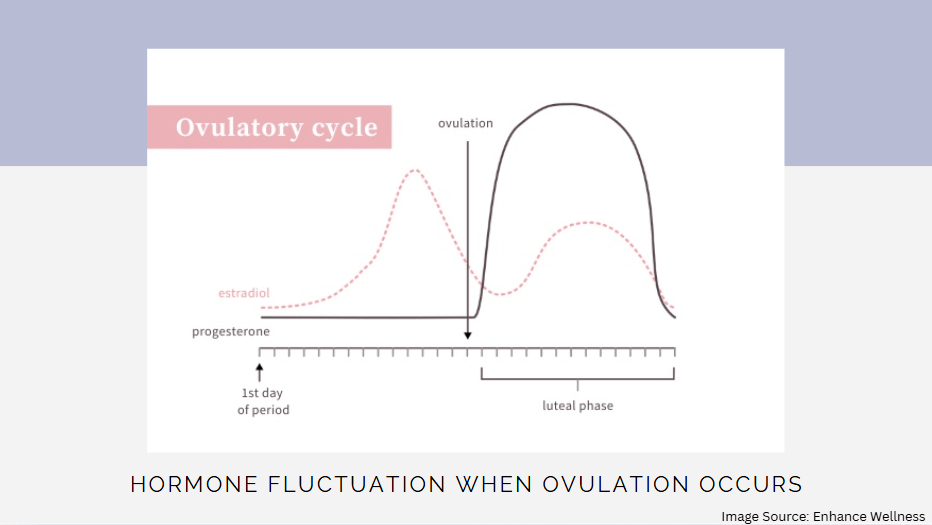
The follicular phase is the pre-ovulatory phase of our cycle. This phase is variable, and we can not predict exactly when ovulation will occur (although there are signs that it’s approaching *ahem* cervical mucus!). Our body wants to feel safe and have the energy required to ovulate, which ultimately is the body’s attempt to try and get pregnant. Illness, travel, exercise, stress, etc can all impact our body’s timing of ovulation. Ovulation can not be predicted, but it can be confirmed retroactively with BBT. Menstruation follows between 10-16 days (average 14 days) following ovulation.
In a study by Soumpasis, Grace & Johnson in 2020, of 32,595 women in 75,981 analyzed cycles they found:
There was a 10-day spread of observed ovulation days for a 28-day cycle, with the most common day of ovulation being Day 15.
Fun Fact #4: Period pain is not normal, even if it is common.
Say it with me again – “Period pain is not normal”.
Period pain, also known as dysmenorrhea, is common, often dismissed, and is believed to be a normal part of being a woman/menstruator. However, discomfort more than mild cramping, that impacts your daily activities and requires the use of painkillers, is not normal or healthy! This indicates an underlying issue within your menstrual cycle.
Menstruation is a normal inflammatory process involving tissue degeneration and restoration in the endometrial lining of the uterus. Disruption in this process can lead to excessive bleeding and/or pain during your period.
Prostaglandins are a group of fats (lipids) that are involved in the body’s response to inflammation. Prostaglandins are critical in menstruation because they initiate the shedding of the lining of the uterus.
Prostaglandins are produced at the site of infected or damaged tissues in the body. Their job is to trigger inflammation, pain and fever as part of the healing process. Women experiencing dysmenorrhea have been shown to have 4 times the levels of prostaglandins in their endometrial tissues on the days where they experience the most severe pain.
Don’t despair. If this is you, it doesn’t have to be. There are ways to support dysmenorrhea and bring you relief. Part of this process is the validation that this pain is not normal, and that women deserve better.
Fun Fact #5: The bleed on hormonal birth control is not a true period.
Were you told that hormonal birth control would regulate your cycles and that you had to take a break/the sugar pills every 28 days or every 3 months or whatever your doctor told you, so that you could have your “period”?
Cause SAME.
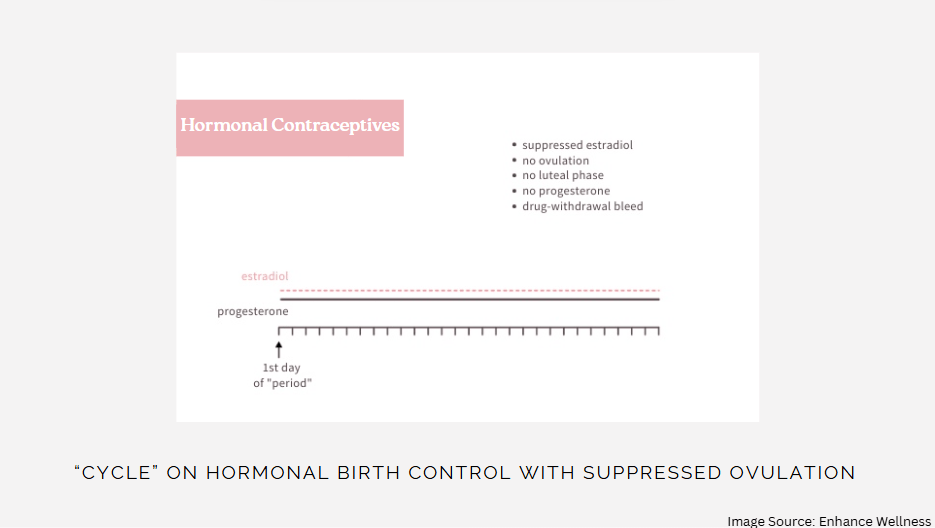
Truth is, without ovulation, which is blocked by the synthetic hormones in hormonal contraceptives, you don’t have a true menstrual bleed. Rather the bleed that is experienced is a withdrawal bleed from discontinuing the synthetic hormones.
A natural cycle looks like this:
A cycle on birth control looks more like this:
I hope you learned something new today. I’d love to hear your favorite of the five February fertility fun facts! 😉
Best wishes,
Discover more from Peak Fertility
Subscribe to get the latest posts sent to your email.
